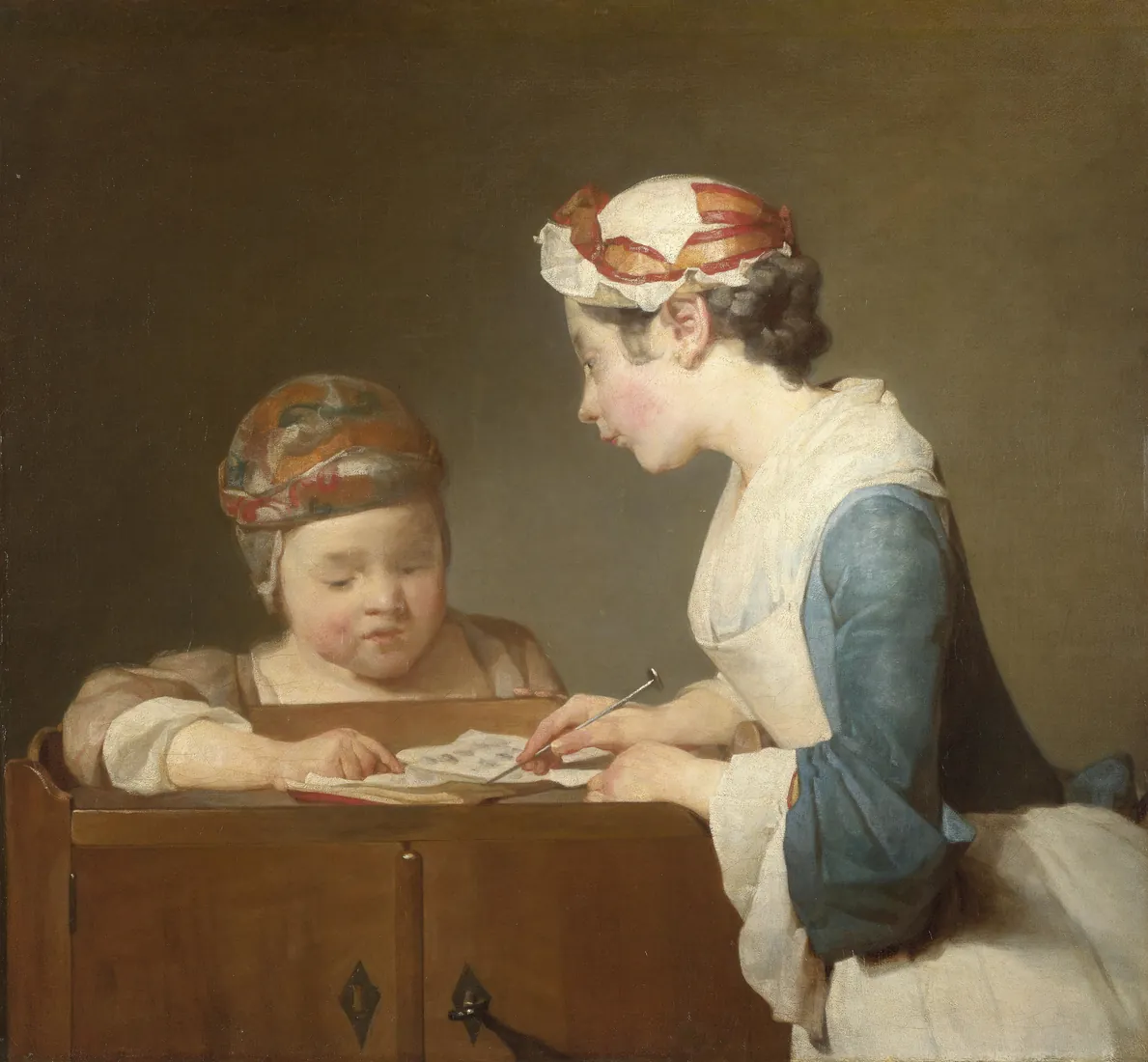
Yes, there are journals that ask you questions, and you don't need AI for it. A single good question, shown at the right moment, is often all it takes to get past a blank page. What a journal shouldn't do, at least for many of us, is answer back. This post is about the difference, what makes a question work, and a set of questions you can borrow tonight.
Why a question helps
The hardest part of journaling is rarely the writing. It's the first line. You open the page, the day sits there in a blur, and nothing in particular asks to be said. So you close it again.
A question gives the blur a shape. "What would you like to remember about today?" is easier to answer than "write something", because it points somewhere. It works the way memory itself works: we reach a moment through a cue, not by staring at a date. A question is a cue you can carry to the page. There's more on that in how we retrieve moments.
And a question asks for very little. One sentence is a complete answer. Often that sentence turns into three, and the three turn into the entry you didn't know you wanted to write.
What makes a good journal question
- It points at something real. "What happened today that you'd like to keep?" beats "How are you feeling about life?" Real moments are easier to start from than big themes.
- It's open, but not empty. It can't be answered with yes or no, and it doesn't ask you to sum up your whole self.
- It's small. It should be answerable in a minute, on a tired evening, on a phone.
- It often involves someone. Most of what we feel is about another person. Questions about people are some of the easiest to answer, and some of the most valuable to read back.
- It gets out of the way. Once you start writing, the question has done its job. It shouldn't follow you down the page.
Asking is not the same as answering back
A growing number of journal apps go further: they read what you write and respond, summarise your week, or carry on a conversation with you. Some people love that, and it's a fair choice.
But it changes what a journal is. When something answers, you start writing for a reader. You explain, you perform a little, you wait to see what it says. A journal used to be the one place where no one was listening. And in most of these apps, your private words become input to a system you can't see.
A question is different. It opens a door and then leaves the room. Everything after it is yours. I wrote more about this choice in why Ember will never have built-in AI.
Twenty questions to start with
Borrow any of these. Use one a night, or keep a few on a card by your bed.
About today
- What would you like to remember about today?
- What was the best ten minutes of your day?
- What surprised you today?
- What did you notice that you'd normally walk past?
- What are you still thinking about from today?
About the people in your life
- Who's been on your mind lately, and why?
- What did someone say to you recently that stayed with you?
- Who made your week a little easier?
- How did you meet someone you love? Write down what you remember before it fades.
- Who haven't you talked to in a while, and what would you tell them?
About the longer story
- What's been happening in your world lately?
- What's changed for you since this time last year?
- What season of your life are you in right now?
- What are you looking forward to?
- What's something you're slowly getting better at?
About what you'd hate to lose
- What's something you never want to forget?
- What's a small habit of someone you love that you'd miss?
- What did your home smell or sound like when you were a child?
- What's a moment from this year you'd want to read again in ten years?
- What happened recently that deserves a place here?
How Ember asks
Ember's empty page asks one question at a time. It has a set of its own, mostly about your day and a few about the people in it, and you can add your own. A few of them:
- What would you like to remember about today?
- Who's been on your mind lately?
- What happened recently that deserves a place here?
- What's been happening in your world lately?
- What's something you never want to forget?
Every twelve seconds the question quietly changes, which is long enough to let a thought finish forming before the next one appears. After the first, the questions fade back so the page gives you room. The moment you start typing, they're gone. Nothing reads what you write, and nothing answers. In Settings ▸ General ▸ Writing prompts you can edit or delete Ember's questions, add your own, or turn them off.
On iPhone and iPad you can also start from a moment in Apple's Journaling Suggestions, such as a photo or a place from your day. And when you mention someone with @, the entry joins their page, so the answer to "Who's been on your mind?" gathers with everything else you've written about them.
Common questions
Is there a journal that asks you questions?
Yes. Many journal apps offer prompts or daily questions, and some paper journals are built entirely around them. Ember asks one gentle question at a time on an empty page and steps aside once you start writing.
Is there an app that gives you journal prompts?
Yes. Day One has daily prompts, Apple Journal offers Journaling Suggestions from your day, and Ember shows a rotating question on every blank journal page, unless you turn it off. You can also keep your own list of questions, like the twenty above.
Is there an AI journaling app that writes back to me?
Yes, several apps now reply to your entries or summarise them with AI. Ember deliberately doesn't: it asks questions, but never reads, rewrites or answers what you write.
Do journal prompts actually help?
For many people they make starting easier, which is most of the battle. The best prompts are small, specific and about something real. If a prompt ever feels like homework, skip it and write whatever is on your mind.
Can I journal without prompts?
Of course. Prompts are a door, not a rule. In Ember, just start typing and the question disappears.
A journal that asks, then steps aside
Ember is a private journal for Mac, iPhone and iPad. One gentle question when you need it, no AI, and your words stay yours.
Download on the App Store